Wouldn’t it make sense to utilize a web site and blog site if one were paying for it? I’d think so and I am sure you would as well. But, no one has ever accused me of usin my head for more than an occasional battering ram. Still, I created this site for a valid reason a couple of years ago and while my plans have had to be put on hold several times I have not lost sight of the original intent–to serve the men and women of the outdoor industry in some way. It is now time to get started doing just that.
MY HISTORY
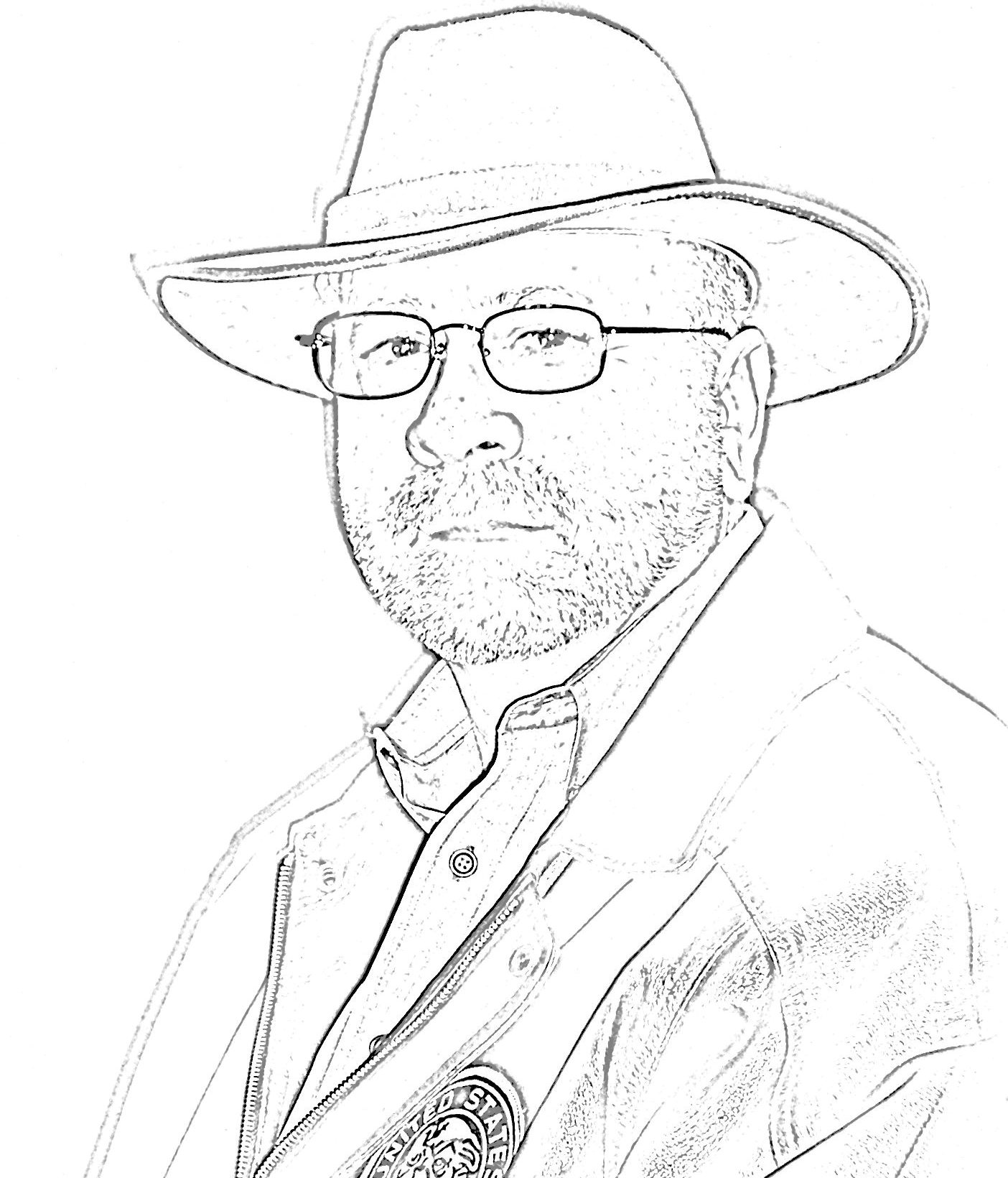
I’ve been a writer/photographer/editor/publisher/teacher for the past 50 years. I wrote my first published newspaper article when I was 14, my first published magazine article when I was 20. Since that time I’ve had well over 2,000 articles published, a couple of dozen short stories, a couple dozen essays and maybe a dozen poems. As for the number of photos I’ve had published, I have no idea. Finally, I’ve had six or seven books published the last one being “Last Supper in Paradise,” which is a collection of short stores about Americans fishing, hunting and scheming in the “new” South Africa. That would be when apartheid finally came to an end.
Much of that work has been periodically recognized by my peers with a number of different awards, going all the way back to my days in the Marine Corps as a journalist and continuing through college and recently. Somehow, I’ve also managed to accumulate the various degrees in English, Mass Communications and straight print journalism which is actually real reporting. All the while that I have been getting published, collecting awards, and earning degrees there was something else clicking in my brain bucket–my love of the outdoors–that being primarily fishing and hunting and associated activities. I wanted to know more, to expand my base of knowledge of the outdoor media and its ancillary activities, fields and history as possible. To that end, when I began my graduate schooling in English at the University of North Dakota I managed to focus my studies and work on outdoor literature and focused my Thesis on the work of my friend, Peter Hathaway Capstick, using Peter and his work as the central thesis reference point.
My career as a writer has had two primary, but still broad, areas of interest: Outdoors, to include not only fishing and hunting, but the environment and outdoor literature, and the second was the military world. Although my work has appeared in lots of magazines four individuals provided the major publishing board for my work: “Soldier of Fortune” magazine is at the top of the list. Over more than four decades of contributing articles and work to SOF I formed a fast and timeless friendship with Robert K. Brown, the magazine’s publisher. I have always been proud to know that Bob Brown is a Best Friend, has been for forty-plus years, and will be until both of us are dust in the wind. If Bob Brown had not become the friend he is, and has always been, I doubt that I could have maintained my career.
The second publisher to afford me the opportunity to write, often whatever I wanted within the parameters of the magazine’s intent, was Bruce Karaban, the publisher of “Shooting Sports Retailer” magazine. With a readership of the majority of store front shooting sports stores in America I had the opportunity to introduce new ideas, concepts, products and emerging companies to the men and women who would ultimately get all that into the hands and minds of the consumer in the shooting sports.
Another editor and publication that gave me room to experiment and search for new approaches to writing the outdoor story was Mitch Cox at “Fur, Fish & Game.” Convention was not so important to Mitch and he let me learn.
Finally, the one person who taught me more about outdoor writing than any other one individual was Glen Titus. Early in my career we formed a firm and wonderful friendship and the memories of that friendship still warm my heart.
There were many, many others who helped me over the years. Jay Cassel at “Sports Afield,” who bought my first piece of outdoor fiction. I could go on naming the men and women who influenced my career.
Equally important to my writing career, past, present and future, are the friends who gathered around me and continued their support and friendship, even when my future looked bleak. Heading that list is Chas Clifton, a successful writer, editor, photographer himself Chas has worked with me on many projects, successful and not so successful. But every year for most of the last 40+ years we’ve shared days in the field after both waterfowl and upland birds, as well as deer hunting and fishing. There have also been many, many hours just talking about our shared love of the outdoors and outdoor literature. Another friend who has been a key figure of my life and work for more than thirty years is Al Starner. A late starter at writing Al has gone on to write for several magazines and is the author of one of my favorite books: “The Emerald Hotel: Africa.” Although it was published more than ten years ago it is still available and is a fun read that is full of adventure and shenanigans. A plus is that the places Starner writes about in Emerald Hotel are real, I know because Al and I visited those places on a gem stone safari in the 1990’s.
You can order a copy of this book from Amazon at this link: https://amzn.to/358xhQZ
I could name many, many more people who have in one fashion or another influenced my writing career, but for now this is enough. What I want to convey to you, my readers and others who come to this blog, is to understand that my Commentaries here, and on my other blog, “The Thinking Hunter,” are the commentaries of someone who is nearing the end of his writing career and with it the closing of the curtain. I am not planning on leaving this world for another 15-20 years, which gives me a lot of time to reflect on what I’ve seen, done, read, studied and learned, all with the intent to somehow use that knowledge to help us, the members of the outdoor media, better understand our roles and responsibilities in a rapidly changing world.
We, the men and women who communicate the outdoor experience, must understand that the world we are writing about today is nowhere near the world that created us. That world is gone. We may still sit around a campfire in hunting camp but don’t be fooled, the cell phones, laptops, IPads, Surface Pros and all the rest of the gadgets and wizardly accoutrements that now accompany us into the field, have changed everything. The deep motives for our being there, whether in a mountain campsite with stars overhead, or a luxury cabin or chalet on another continent, have not changed, but the surface motives have changed.
Certainly there are still men and women who face the outdoor experience as a challenge, a way to recapture some elements of life that have been lost in the last few decades, but their number is shrinking while the number of non-involved individuals, in the US and throughout the world, continues to grow, and as those numbers grow the confusion and misunderstandings between the two groups make the future of the outdoors even more precarious. I hope my commentaries will help the men and women, young and old, of the outdoor media to better understand their roles today and the long-lasting effects of what they write, photograph and say in today’s world. My posts will not be on a scheduled basis, but when I learn about something, or someone, that needs to be discussed. I trust that will be sufficient. Glg
 The Pines Review Commentary